Jewish Wedding Vows: Meaning, Traditions & Beautiful Promises
A Jewish wedding is a beautiful celebration of love, commitment, faith, family, and community. From standing beneath the chuppah to exchanging rings, signing the ketubah, sharing blessings, and breaking the glass, each tradition carries its own meaning.
Rather than having one universal set of wedding vows, Jewish wedding ceremonies bring together several important declarations, blessings, and commitments. The exact customs can vary depending on the couple’s Jewish tradition, community, and personal choices.
Whether you are planning a traditional Jewish wedding or creating a more modern ceremony, understanding these traditions can help you choose meaningful words and rituals for your special day.
What Are Jewish Wedding Vows?
Jewish wedding ceremonies do not follow one single universal wording for wedding vows. Instead, the couple’s commitment is expressed through several parts of the ceremony, including the exchange of rings, the marriage contract known as the ketubah, and the Sheva Brachot, or Seven Blessings.
In a traditional Jewish ceremony, the ring exchange includes a Hebrew declaration that expresses the sanctification of the marriage according to Jewish tradition. Modern Jewish ceremonies may also include additional language that reflects mutual commitment, equality, love, and partnership.
The customs can differ between Orthodox, Conservative, Reform, Sephardic, Ashkenazi, and other Jewish communities, so couples should work with their rabbi or officiant when deciding which traditions and wording are appropriate for their ceremony.
The Traditional Jewish Ring Ceremony
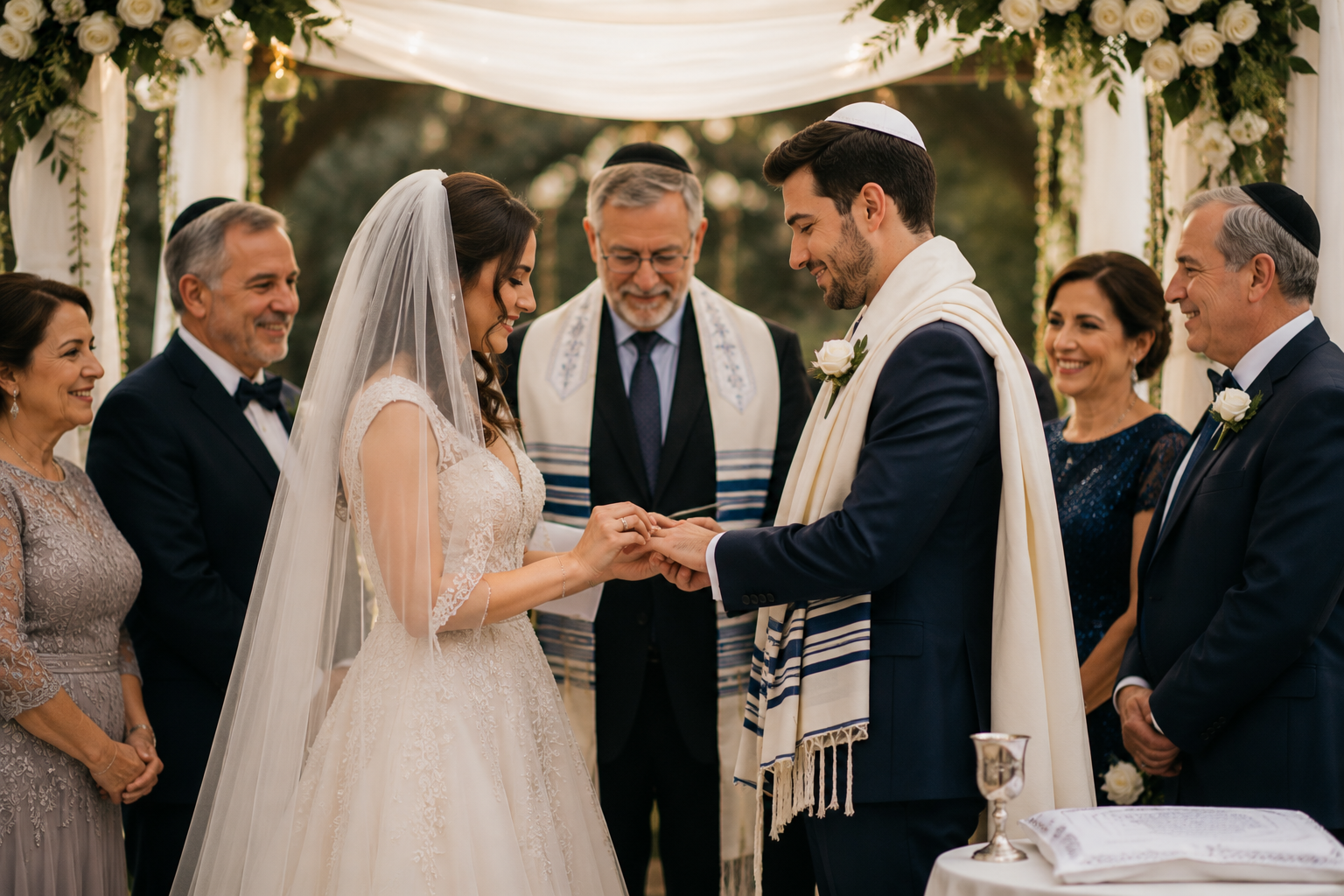
The exchange of rings is one of the central moments of a Jewish wedding ceremony. Traditionally, the groom gives the bride a ring while reciting a Hebrew declaration that translates approximately to:
“Behold, you are consecrated to me with this ring according to the laws of Moses and Israel.”
The declaration expresses the sacred nature of the marriage. In many contemporary Jewish ceremonies, couples have adapted the ring exchange to create a more mutual and egalitarian expression of commitment.
Some modern ceremonies include a reciprocal ring exchange in which both partners make a declaration to one another. The exact wording and practice should be discussed with the couple’s rabbi or officiant. :contentReference[oaicite:1]{index=1}
What Is the Ketubah?
The ketubah is the traditional Jewish marriage contract. It is one of the oldest elements of Jewish wedding tradition and has historically outlined responsibilities and protections within the marriage.
Today, many couples choose ketubah texts that reflect their own values and relationship. Modern ketubot may emphasize mutual love, equality, partnership, shared responsibility, and the Jewish home the couple hopes to create together.
The ketubah is commonly signed before the wedding ceremony in the presence of witnesses and may later be displayed in the couple’s home as a lasting reminder of their commitment. :contentReference[oaicite:2]{index=2}
The Chuppah: Beginning Your Shared Home
The chuppah is the wedding canopy under which the couple is married. It is one of the most recognizable symbols of a Jewish wedding.
Traditionally open on all four sides, the chuppah can represent the home that the couple will build together. Its openness can also symbolize hospitality and the importance of community in Jewish life.
Couples may choose a traditional canopy, a family heirloom, a tallit, or a personalized design that reflects their story and values. :contentReference[oaicite:3]{index=3}
Sheva Brachot: The Seven Wedding Blessings
The Sheva Brachot, or Seven Blessings, are among the most important traditional elements of a Jewish wedding ceremony.
They are traditionally recited or chanted under the chuppah following the exchange of rings. The blessings celebrate creation, humanity, joy, love, companionship, and the hope for happiness and peace.
The Seven Blessings can be recited by the rabbi, cantor, family members, or honored guests. Many modern couples also incorporate English translations or contemporary interpretations so that everyone attending can understand their meaning. :contentReference[oaicite:4]{index=4}
1. Blessing of the Vine
The first blessing is traditionally made over wine and celebrates the fruit of the vine.
2. Creation and the World
The next blessing gives thanks for creation and the world in which human life unfolds.
3. Creation of Humanity
This blessing celebrates humanity and the gift of life.
4. The Creation of People
The blessings continue by celebrating human life, connection, and the possibility of companionship.
5. Joy and Community
The blessings connect marriage with the joy of building a life together and continuing the Jewish community.
6. Love and Marriage
This blessing celebrates the happiness of the couple and the joy associated with marriage.
7. Happiness, Love and Peace
The final blessing celebrates the couple’s happiness and looks toward a world filled with joy, love, and peace.
Jewish Wedding Promises and Modern Ceremonies
Jewish wedding traditions have evolved over time, and many modern couples incorporate their own values into the ceremony while honoring Jewish customs.
For some couples, this may mean a traditional ceremony with established Hebrew wording. For others, it may include a more egalitarian ring exchange, personalized ketubah language, English readings, or additional promises written specifically for the couple.
Modern Jewish ceremonies can therefore create a balance between tradition and personal expression.
Love
Expressing the love and affection that brought you together.
Partnership
Promising to build a life together and share responsibilities.
Respect
Recognizing the importance of mutual respect and understanding.
Community
Recognizing the family and community that support the couple throughout their marriage.
Shared Future
Creating a home and future based on the values that matter most to both partners.
Breaking the Glass
At the conclusion of many Jewish wedding ceremonies, a glass is broken beneath the groom’s foot, followed by joyful cries of “Mazel tov!”
The ritual has several interpretations. One traditional interpretation connects the broken glass with the destruction of the Temple in Jerusalem, reminding the couple and their guests that even in moments of great happiness, the Jewish community remembers its history and suffering.
Another interpretation views the fragile glass as a reminder that relationships should be treated with care. For many couples, the moment symbolizes transformation and the beginning of a new chapter together. :contentReference[oaicite:5]{index=5}
Traditional or Personalized Jewish Wedding Promises?
Jewish couples have many options when creating a meaningful ceremony. The right choice depends on the couple’s Jewish tradition, family background, rabbi, and personal preferences.
Traditional Jewish Wedding Ceremony
A traditional approach may include:
Personalized Jewish Wedding Ceremony
Depending on the couple’s community and officiant, a modern ceremony may also include:
How to Write Your Own Jewish Wedding Promises
If your ceremony allows personal vows or additional promises, begin by thinking about the kind of marriage and home you want to build together.
Think About Your Story
Remember the experiences and moments that brought you together and made your relationship special.
Think About Your Shared Values
Consider the values that you want your marriage and home to represent, such as love, kindness, family, community, justice, and faith.
Make Real Promises
Think about the practical promises you want to make to one another as you build your life together.
Honor Your Tradition
If your ceremony follows a particular Jewish tradition, discuss your ideas with your rabbi or officiant so that your personal words complement the established ceremony.
Speak From the Heart
Your promises do not need to be complicated. Honest and meaningful words can create some of the most memorable moments of your wedding day.
Jewish Wedding Vows: A Celebration of Love and Community
Jewish wedding traditions bring together love, commitment, history, faith, family, and community. From the chuppah and ketubah to the ring ceremony and Seven Blessings, each element gives the couple an opportunity to reflect on the life they are beginning together.
Whether you choose a traditional ceremony or create a modern celebration that reflects your relationship, the most meaningful promises are those that represent the values and future you want to share.
Create Your Own Wedding Vows
Your love story is unique. Your promises can be, too.
Use the beauty of Jewish wedding traditions as inspiration while creating personal promises that reflect your relationship, your values, and the future you hope to build together.
Explore More Wedding Vows
Every couple has a unique story. Explore wedding vows from different traditions and discover the promises and traditions that speak to your relationship.