Muslim Wedding Vows: Understanding Nikah, Promises & Marriage Traditions
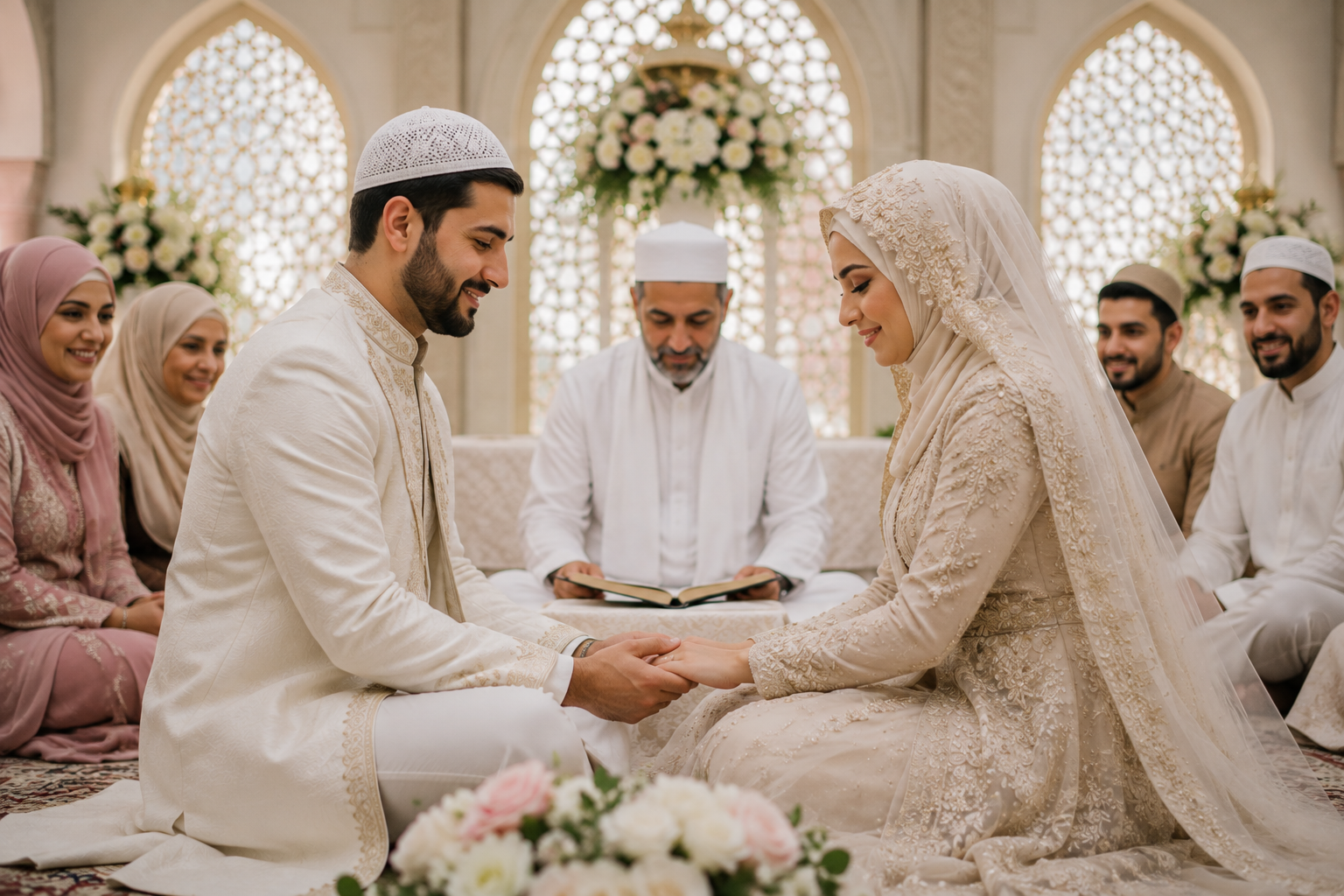
A Muslim wedding is a beautiful celebration of love, faith, family, and commitment. At the heart of the Islamic marriage ceremony is the Nikah, the marriage contract through which a couple enters into a committed marital relationship.
Unlike some wedding traditions that follow one standard set of spoken vows, Muslim marriage ceremonies can vary significantly between communities, cultures, families, and schools of Islamic thought. The couple’s commitment is expressed through the marriage contract, the acceptance of the marriage, the mahr, prayers, and other meaningful elements of the ceremony.
Understanding these traditions can help couples appreciate the meaning behind their wedding ceremony while finding ways to express their own love and hopes for married life.
What Are Muslim Wedding Vows?
There is no single universal set of “Muslim wedding vows” used by every Muslim couple. Instead, the central commitment of an Islamic marriage is established through the Nikah, the marriage contract.
The ceremony generally includes an offer and acceptance of marriage, known as ijab and qabul. The couple agrees to enter the marriage according to the terms of the Nikah, with the appropriate witnesses and other requirements depending on the couple’s tradition and legal or religious setting.
The marriage is understood as a serious commitment and sacred trust. Islamic teachings emphasize love, mercy, mutual care, responsibility, and good treatment between spouses. :contentReference[oaicite:1]{index=1}
What Is Nikah?
Nikah refers to the Islamic marriage contract. It establishes the marriage between the couple and records important terms and commitments associated with their union.
The exact structure of a Nikah ceremony can differ depending on the couple’s country, culture, family tradition, mosque, imam, and school of Islamic jurisprudence.
For couples planning an Islamic wedding, speaking with their imam or qualified religious officiant is the best way to understand the specific requirements and wording appropriate for their ceremony.
Ijab and Qabul: The Offer and Acceptance
One of the central elements of the Nikah is ijab and qabul, referring to the offer and acceptance of the marriage.
In simple terms, one side makes an offer of marriage and the other accepts it. The wording can vary depending on the ceremony and tradition, but the purpose is to establish the couple’s agreement to enter into marriage.
This moment represents the couple’s mutual commitment to begin their life together as husband and wife.
A Promise of Commitment
The acceptance of the marriage represents the couple’s willingness to enter into the responsibilities and commitments of married life.
A Public Commitment
The Nikah is traditionally witnessed and recognized within the couple’s community, giving the marriage a public and communal dimension.
A Sacred Trust
Islamic teachings describe marriage as more than a private arrangement. It carries spiritual, ethical, and practical responsibilities for both partners. :contentReference[oaicite:2]{index=2}
What Is Mahr?
Mahr, sometimes called the marriage gift or dower, is a gift given by the husband to the wife as part of the marriage arrangement.
The form, amount, timing, and specific terms of the mahr can vary according to the couple’s agreement, local customs, and Islamic legal tradition. It may be given at the time of marriage, deferred, or structured in another agreed form. :contentReference[oaicite:3]{index=3}
Mahr should not simply be viewed as a price attached to marriage. It is an important part of the marriage agreement and represents a financial right and gift to the bride.
A Meaningful Gift
Couples and families may agree on a mahr that has financial, practical, or personal significance.
A Marriage Right
The mahr is associated with the bride’s rights within the marriage contract.
A Shared Agreement
The specific arrangement should be discussed and agreed upon before the marriage contract is completed.
The Meaning Behind Muslim Marriage Promises
Although there is no single universal Muslim wedding-vow script, the values associated with Islamic marriage provide meaningful inspiration for the promises a couple may make to one another.
Love and Affection
A marriage should provide a relationship built on love, care, and emotional connection.
Mercy and Compassion
Marriage involves understanding and supporting one another through both joyful and difficult periods.
Respect
Mutual respect is an important foundation for creating a healthy and lasting relationship.
Trust and Faithfulness
A strong marriage depends on honesty, loyalty, and trust between partners.
Responsibility
Marriage brings responsibilities toward one another and, where applicable, toward the family the couple builds together.
Muslim Wedding Prayers and Duas
Prayers and duas can be an important part of a Muslim wedding and the beginning of married life.
A well-known supplication for newlyweds asks Allah to bless the marriage and bring the couple together in goodness:
“May Allah bless you, shower His blessings upon you, and join you together in goodness.”
This traditional supplication reflects the hope that the couple’s marriage will be filled with blessing, goodness, and lasting happiness. :contentReference[oaicite:4]{index=4}
Traditional Muslim Marriage Ceremony
A Muslim wedding may include several different elements depending on the couple’s cultural and religious traditions.
Nikah
The Islamic marriage contract that establishes the marriage.
Ijab and Qabul
The offer and acceptance through which the couple agrees to enter into marriage.
Mahr
The marriage gift agreed upon for the bride.
Witnesses
Witness requirements and practices can vary according to the applicable Islamic legal tradition and ceremony.
Khutbah and Duas
The ceremony may include a marriage sermon, Quranic recitation, prayers, and supplications.
Walima
Many Muslim couples celebrate their marriage with a wedding feast or reception known as a walima.
Can Muslim Couples Personalize Their Wedding Vows?
Many couples want their wedding ceremony to include personal expressions of love and commitment. However, personal vows should complement rather than replace the religious requirements of the Nikah.
If you would like to include personalized promises, discuss them with your imam, officiant, or qualified religious advisor before the ceremony.
Depending on the couple’s tradition and ceremony, personal words can be used to express feelings, hopes, gratitude, and promises for the future.
How to Write Your Own Muslim Wedding Promises
If your ceremony allows personal promises, think about the qualities and commitments that you want your marriage to represent.
Start With Your Story
Think about how you met, what brought you together, and the qualities you value most in your partner.
Talk About Your Future
Think about the home, family, experiences, and future you hope to build together.
Promise Support
Consider how you will support one another through challenges, changes, achievements, and new chapters of life.
Include Love and Mercy
Think about how you want to show kindness, patience, compassion, and affection throughout your marriage.
Keep Your Words Genuine
Your personal promises do not need to be complicated. Honest words that reflect your relationship can be the most meaningful.
Traditional or Personalized Muslim Wedding Promises?
Every Muslim couple has a unique relationship and family tradition. Some couples prefer to keep their ceremony closely connected to established religious customs, while others may want to add personal expressions that reflect their own story.
Traditional Muslim Wedding Ceremony
A traditional approach may focus on:
Personalized Wedding Promises
Where appropriate, personal promises can express:
Muslim Wedding Vows: A Commitment Built on Love and Trust
Muslim marriage traditions bring together faith, commitment, responsibility, family, and community. The Nikah establishes the marriage contract, while the couple’s promises and prayers express their hopes for a life built together.
Whether your ceremony follows a traditional Islamic format or includes carefully chosen personal expressions, the most meaningful commitments are those that reflect the love, values, and future you want to share.
Create Your Own Wedding Vows
Your love story is unique. Your promises can be, too.
Use the values of love, compassion, trust, respect, and partnership as inspiration for creating personal promises that reflect your relationship and the future you hope to build together.